
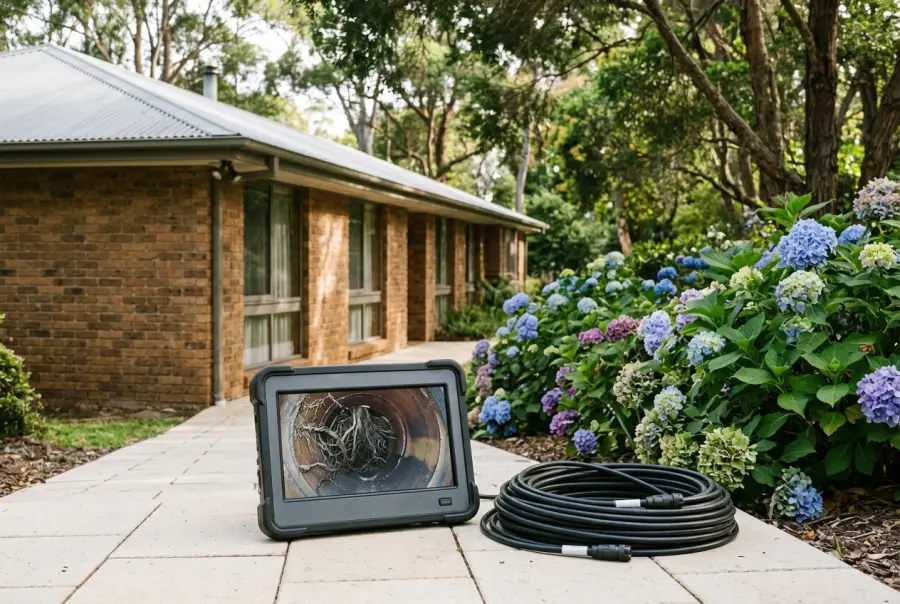
Glenbrook is at the bottom of the Mountains. It is milder than the upper towns, and its big gums grow large and thirsty. Roots in sewer lines are a regular cause of repeat blockages.
Housing ranges from older homes to newer estates. Older streets often have clay sewers with many joints. Newer estates have modern pipe, but blocks that back onto bushland still get leaf and bark in their stormwater drains.
Gullies and creeks nearby carry quick runoff in heavy rain. Blocks near a watercourse can see pits fill quickly, and low-lying yards can hold water if a drain is blocked.
Sydney Water sewer serves most of Glenbrook. If you aren't sure whose pipe the blockage is in, the plumber can help tell you.
Water from steeper streets runs past driveways. Check the pits near yours if water runs through the gutter faster than it drains.
Homes near the bush should keep an eye on gutters, as bark and leaves fall through the year.
Common drain problems in Glenbrook
- Roots from big gums in clay sewers on older streets
- Leaf and bark in stormwater on bush-edge blocks
- Quick runoff near gullies and creeks
- Wipes and fat in newer plastic lines
Pick your problem
In Glenbrook the two big causes are roots and leaves. For roots, read tree roots. For a single fixture that won't clear, try blocked toilet or slow sink or shower. A yard that stays wet is a stormwater drains job. If your property has a tank, go to septic and pump-out systems. Otherwise the signs of a blocked drain will point you the right way.
Getting a plumber in Glenbrook
Use the form on the contact page, or call. Tell the plumber which fixtures are affected and how long it has been going on. Your sewer service diagram helps if you have it. Ask for a quote before work starts.
Blocked drain in the Blue Mountains?
Call 0495 053 644Glenbrook drain questions
Does Glenbrook get less cold weather trouble?
Generally. It is milder than the Upper Mountains, so roots and leaves are the bigger drain issue.
Why does my yard stay wet after rain?
A blocked stormwater line or pit can hold water. Check the grate first.
Where does the sewer main run?
Often in the street or along the back boundary. Your sewer service diagram shows it.