
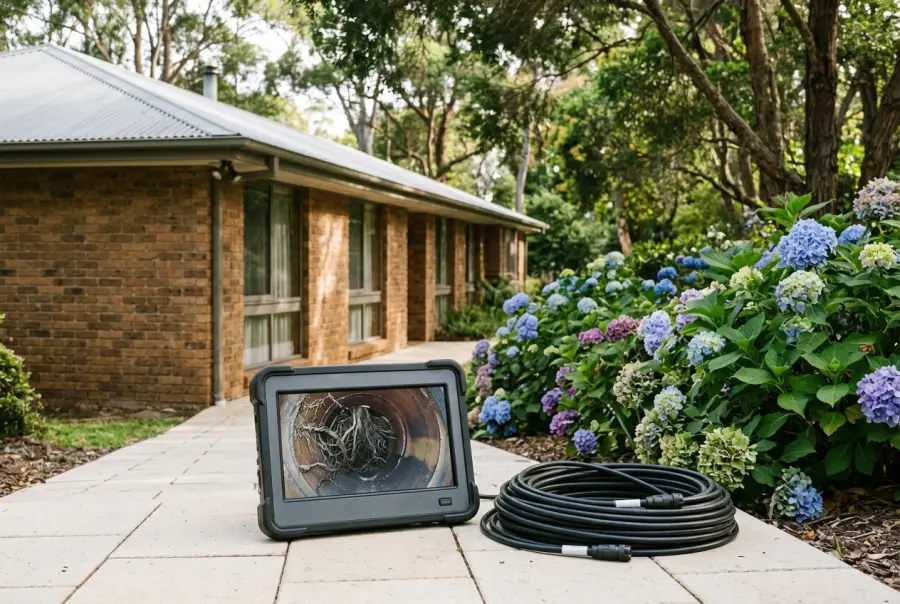
Springwood sits along a ridge, with the railway and the Great Western Highway running through it. Many houses back onto bushland, so gum leaf, bark and fine silt wash into gutters and stormwater lines.
The housing is mixed. Older weatherboard and fibro homes near the centre often have original earthenware sewers. Newer streets have PVC pipe, which has fewer joints but can still block from fat, wipes and roots where it joins older pipe.
On sloping blocks a sewer line can end up with only a gentle fall, and a flat run slows waste. If a toilet or shower in Springwood blocks again and again, ask whether the fall of the line has been checked.
Most homes are on Sydney Water sewer. Some larger bush blocks on the edges use septic tanks, so know which you have before you call.
Unit blocks near the station often share lines. If neighbours also have slow drains, say so when you call.
Common drain problems in Springwood
- Gum roots in earthenware sewers near the centre
- Leaf and silt blockages in stormwater from bush-backed blocks
- Flat or sagging runs in older additions
- Wipes and fat in newer plastic lines
Where to read next
On a bush-backed block, leaves are the first suspect. Gutters overflowing and pits backing up are covered under stormwater drains. A blocked toilet or a slow sink or shower inside the house is a different job. If it keeps returning, tree roots may be the cause. If you have a tank, read septic and pump-out systems. The signs of a blocked drain page helps if you can't tell what you have.
Getting a plumber in Springwood
Send the form on the contact page, or call. Include your street, which fixtures are slow or blocked, and photos if water has overflowed. Ask for a quote before work starts, and ask the plumber to explain what they plan to do.
Blocked drain in the Blue Mountains?
Call 0495 053 644Springwood drain questions
Do bush-backed blocks have more drain trouble?
Often they do. Leaves, bark and silt flow into gutters and pits, and roots reach nearby pipes.
My Springwood home is newer. Can roots still get in?
Yes, mainly at joints where new pipe meets older pipe, or at poorly sealed joints.
How do I tell if I have septic?
Look for a lid in the yard or check your rates notice.